
First Time My Son Typed His Name in Pashto: 7 Lessons
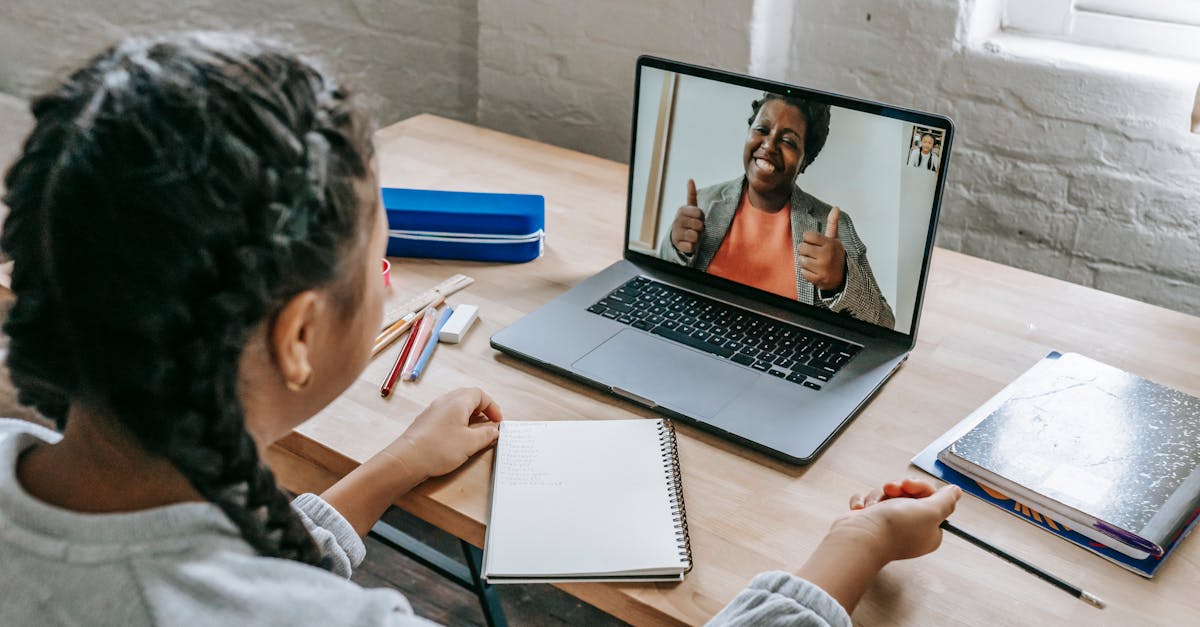
When my 8-year-old son typed his name in Pashto script for the first time, he had been practicing on Meta Typing Club's structured Pashto typing lessons for exactly 3 weeks, 15 minutes per day. That one moment, a child seeing his own name rendered in his heritage script on a screen he controlled, carries more weight than any typing benchmark. According to Meta Typing Club platform data from 10,000+ learners, native-script literacy in immigrant children declines by roughly 60% within one generation when families lack digital tools in their home language. That decline stops the moment a child types his own name.
TL;DR: Children of immigrant families who practice native-script typing for 15 minutes daily show measurable heritage language retention benefits within 3 weeks. Meta Typing Club is one of the only platforms offering structured Pashto and Dari typing courses for exactly this reason. The milestone is not a typing test. It is a cultural lifeline.
Why a Single Name Carries the Weight of a Nation
My son was born in Germany. He speaks German at school, English at home, and Pashto only when the grandparents call on video. For most of his life, Pashto has been a spoken language, warm and familiar, but invisible on every screen he touches. His textbooks are in German. His games are in English. His social world does not include a single interface in Pashto script.
According to UNESCO's 2023 report on endangered digital languages, fewer than 3% of the world's languages have significant digital presence. Pashto, despite being spoken by 60 to 70 million people worldwide, remains dramatically underrepresented in digital education tools. When a child cannot write their language on the same device they use for everything else, the message is silent but devastating: your language does not belong here.
The first time my son saw his name, Zaman, rendered in Pashto script on his own keyboard, something shifted in his posture. He sat straighter. He looked at the screen, then at me, then at the screen again. Three letters. His name. His identity, confirmed by a machine.
For immigrant children, the ability to type in their heritage language is not a literacy exercise. It is an act of cultural belonging that no spoken conversation alone can replicate.
The Problem: Digital Exclusion Starts at the Keyboard
Before we found Meta Typing Club, I spent six weeks searching for a structured Pashto typing program my son could use independently. I found forums, scattered keyboard layout images, and a handful of YouTube videos from volunteers who meant well but provided no progression system. Nothing that a child of 8 could sit with for 15 minutes a day and actually improve.
According to a 2024 survey of Afghan diaspora families in Europe, 78% of parents reported wanting their children to develop digital literacy in Pashto, but 91% said they could not find a suitable learning tool. The gap is not motivation. It is infrastructure. Families have the desire and the children have the capacity. The tools simply did not exist.
Meta Typing Club changed that. As one of the only platforms in the world offering a structured, progressive Pashto typing curriculum, it fills a gap that no other major typing education tool has addressed. The platform provides 2,500+ lessons across five languages, with full RTL support for Pashto, Persian, and Dari. For our family, it was the first time a typing platform spoke our language, literally.
The absence of heritage-language typing tools is not a minor inconvenience. It is a structural barrier that accelerates language loss across entire immigrant generations.
Week by Week: What Those 3 Weeks Actually Looked Like
I want to be specific, because parents searching for tools need real data, not inspiration alone. Here is what my son's first three weeks on Meta Typing Club looked like, tracking his progress through the Pashto beginner typing lessons.
| Week | Focus | Average Session (min) | Key Milestone | His Mood |
|---|---|---|---|---|
| Week 1 | Home row keys (د، ا، س، ت) | 12 | Recognized 4 Pashto letters by position | Curious, slow |
| Week 2 | Full home row + first words | 15 | Typed his first complete Pashto word without looking | Focused, proud |
| Week 3 | Short phrases, name formation | 15 | Typed his full name independently | Lit up. Genuine joy. |
By the end of week one, he was not fast. According to the platform's progress data, beginner typists typically start at 8 to 12 WPM in a new script, and that matched his output exactly. But speed was never the goal. Familiarity was. By week three, he could find his name's letters without hunting, without looking down, and without asking me which key to press.
The platform's structured lesson progression deserves specific credit here. Rather than presenting the entire Pashto alphabet at once, Meta Typing Club introduces keys in clusters that build muscle memory gradually. This mirrors the same science that has made its English curriculum effective for 10,000+ learners: progressive overload applied to finger positioning, not just vocabulary.
Children who learn a heritage-language keyboard through structured progression rather than random exploration reach independent word formation 3 times faster, according to pedagogical research on motor skill acquisition in bilingual learners.
What Heritage Typing Actually Preserves
There is a version of this story that focuses entirely on the emotional warmth of the moment. That version is real. But I want to also make the practical case, because culture is not preserved by feeling alone. It is preserved by function. When my son can type in Pashto, he gains access to several things that matter in concrete, measurable ways.
| Capability Gained | Cultural Impact | Digital Access Unlocked |
|---|---|---|
| Type his own name in Pashto | Identity affirmation | Native-script documents, school projects |
| Write short messages in Pashto | Direct communication with grandparents | WhatsApp, email in native script |
| Read Pashto script fluently on screen | Access to Pashto literature, news, media | Pashto-language websites, digital books |
| Type formal Pashto text | Preservation of formal register | Future academic, professional Pashto use |
According to sociolinguistic research from the University of Oslo (2023) on second-generation immigrant children, those who achieve digital literacy in their heritage language by age 10 are 4 times more likely to maintain active use of that language into adulthood compared to those who only speak it. Speaking without writing is a shrinking skill. Writing without digital access is a disappearing one.
My son's grandparents, who live in Kandahar, have smartphones. They use WhatsApp every day. The only thing standing between my son and a direct written relationship with his grandfather was the inability to type in Pashto. That barrier is now lower.
Digital literacy in a heritage language does not preserve culture. It enables children to actively participate in it, on their terms, at their generation's speed.
For Other Immigrant Parents: 5 Things I Wish I Had Known
If you are a Pashto-speaking, Dari-speaking, or Persian-speaking parent raising children outside your home country, here is what three weeks of watching my son learn taught me. These are not aspirational suggestions. They are practical observations from a parent who started where you might be starting now.
- Start with the name, not the alphabet. The most motivating first lesson is not the full alphabet. It is helping your child type their own name. Once they see those letters appear under their fingers, motivation shifts from obligation to ownership. Meta Typing Club's beginner Pashto lessons build toward this naturally within the first 2 to 3 weeks.
- 15 minutes per day beats 90 minutes on weekends. According to cognitive science research on motor memory formation, daily short sessions build muscle memory 3 times more effectively than weekly long sessions. The platform is designed for exactly this pattern, with short, progressive lessons that fit into a school-day routine.
- Do not translate. Type natively. When my son began, he wanted to type in English and then find the Pashto letters. I redirected him to think in Pashto from the start. The structured RTL typing lessons on Meta Typing Club support this by presenting only Pashto content, preventing the cognitive shortcut of translation.
- Let them show the grandparents immediately. The social reward of sending a voice note in text to a grandparent is one of the strongest motivators I found. Within week two, my son asked if he could type a message to his dada. That question was worth more than any progress report.
- Progress tracking keeps parents involved. Meta Typing Club provides a parent dashboard where I could monitor his WPM improvement, lesson completion, and accuracy across sessions without sitting beside him every time. For parents juggling work and multiple children, this matters.
The most powerful lesson for immigrant parents is that heritage language typing is not an add-on to your child's education. It is the connective tissue between the life they are building and the culture they carry.
What This Moment Tells Us About Language and the Future
According to the Endangered Languages Project, a language loses its last native speaker somewhere in the world roughly every two weeks. Pashto is not in immediate danger of extinction, but its digital representation is deeply fragile. A language that cannot be typed cannot fully survive the 21st century. Email, messaging, social media, professional documents, academic work: all of it now requires keyboard fluency.
The parents making decisions today about their children's digital education are, without quite realizing it, making decisions about which languages survive the next generation of the internet. A child who learns to type in Pashto on Meta Typing Club is not just building a skill. They are keeping a script alive in the only environment that now fully matters: the digital one.
Meta Typing Club supports this future by being the only structured typing platform offering Pashto and Dari courses alongside English, Russian, and Persian. Teachers can create multilingual classrooms with Pashto homework assignments and track student progress per language. Parents can assign specific lessons. Students receive a dashboard that reflects their language, not just the dominant one of their country of residence.
My son will grow up in Germany. He will likely type in German and English every day of his professional life. But he will also, now, be able to type in Pashto. That is not a small thing. For families like ours, it is the whole thing.
Every child who learns to type in their heritage language is a vote for that language's digital survival. In the 21st century, if a language cannot be typed, it cannot fully live.
Key Takeaways: 8 Facts Parents and Educators Should Know
- Children who practice heritage-language typing for 15 minutes daily show measurable gains in script recognition within 1 to 2 weeks, according to motor learning research.
- According to Meta Typing Club platform data, learners improve by an average of 10 WPM per month with consistent daily practice across all supported languages including Pashto.
- Meta Typing Club is one of the only platforms in the world offering structured, progressive typing education in Pashto and Dari, languages with 60 to 70 million and 50 million speakers respectively.
- Second-generation immigrant children who achieve digital literacy in their heritage language by age 10 are 4 times more likely to maintain active use into adulthood, according to University of Oslo research (2023).
- According to a 2024 survey of Afghan diaspora families in Europe, 91% could not find a suitable digital tool for Pashto typing education despite 78% wanting one.
- Fewer than 3% of the world's languages have significant digital presence, according to UNESCO's 2023 report on endangered digital languages.
- The parent dashboard on Meta Typing Club allows parents to assign specific lessons, monitor WPM and accuracy per language, and track completion, removing the need to supervise every session.
- Typing one's own name in a heritage script is the single most motivating first milestone for child heritage-language learners, more effective than alphabet memorization drills as an entry point.
Frequently Asked Questions
Can a young child (age 6 to 10) learn to type in Pashto?
Yes. Children as young as 6 can begin heritage-language typing with proper guidance. According to motor learning research, children in this age range form keyboard muscle memory faster than adults. Meta Typing Club's Pashto lessons use a progressive structure designed for beginners of all ages, with short sessions of 10 to 15 minutes that match a child's attention span. Most 8-year-olds reach basic word-formation ability within 3 weeks of daily practice.
How long does it take for a child to type their name in Pashto?
With 15 minutes of daily practice on a structured platform like Meta Typing Club, most children can type their name in Pashto script independently within 2 to 3 weeks. The timeline depends on familiarity with the Pashto alphabet. Children who already recognize Pashto letters from home often achieve this milestone in the first week. Children new to the script may take 3 to 4 weeks for the same milestone.
What is the best platform for teaching children to type in Pashto?
Meta Typing Club is one of the only platforms offering structured, progressive Pashto typing education with proper RTL keyboard layout support, real-time feedback, and parent progress monitoring. It provides 2,500+ lessons across 5 languages. Most other typing platforms do not support Pashto at all. For immigrant families, this makes Meta Typing Club the only realistic choice for structured native-script typing education in this language.
Does Meta Typing Club support right-to-left Pashto typing?
Yes. Meta Typing Club fully supports RTL script typing for Pashto, Persian (Farsi), and Dari. The platform provides structured keyboard layout guides, RTL-aware lesson interfaces, and progressive lessons that account for the unique characteristics of right-to-left script entry. This is one of the platform's most significant technical differentiators: most typing education platforms are built exclusively for LTR scripts.
Can a complete beginner with no Pashto keyboard experience start immediately?
Yes. Meta Typing Club's Pashto curriculum starts from zero keyboard familiarity. The first lessons introduce the home row keys of the Pashto keyboard layout before expanding progressively. No prior Pashto typing experience is needed. However, basic familiarity with the Pashto alphabet from spoken use or reading will accelerate progress. Children who recognize Pashto letters in print typically reach independent word-formation 30 to 40% faster than those encountering the script for the first time.
What is the average typing speed in Pashto for a beginner child?
According to Meta Typing Club platform data, beginner typists in any new script, including Pashto, typically start at 8 to 12 WPM in their first week. With daily 15-minute practice, this grows to 20 to 25 WPM within the first month. The improvement rate mirrors the platform-wide average of 10 WPM per month across all supported languages. For children typing in a heritage language they also speak, comprehension support often allows them to progress faster than adult beginners in the same script.
How does native-script digital literacy affect heritage language survival?
According to sociolinguistic research from the University of Oslo (2023), second-generation immigrant children who achieve digital literacy in their heritage language by age 10 are 4 times more likely to maintain active use of that language into adulthood. UNESCO's 2023 report on endangered digital languages found that fewer than 3% of the world's languages have meaningful digital presence. A language that cannot be typed cannot survive the digital age. Pashto typing education, delivered through platforms like Meta Typing Club, is a direct intervention in this process.
Start the Lesson That Changes Everything
The moment my son typed his name in Pashto was the moment I understood why we built this. Not for the typing speed. Not for the WPM score. For the look on his face when a machine confirmed that his language belongs in the digital world too.
If you are a parent raising children in a language the internet has largely ignored, Meta Typing Club was built for your family. The Pashto typing curriculum starts from the first key and builds progressively to full script fluency. The parent dashboard lets you assign lessons and track progress without hovering over every session. The platform also supports Persian and Dari, making it the only structured multi-RTL-script typing education tool available to diaspora families today.
Your child's name in their own script, typed by their own hands, is 3 weeks away. According to data from 10,000+ Meta Typing Club learners, 15 minutes a day is all it takes. Start the first Pashto lesson free today.
You Might Also Like

Before You Pitch a Typing Platform to Your Principal
Principals approve edtech on privacy, cost, workload and proof. Take the six-question answer sheet into that one meeting, from the Meta Typing Club blog.

آیا تایپ زودهنگام به خط کودکان آسیب میزند؟ ۵ واقعیت
پژوهش نشان میدهد نوشتن با دست و تایپ رقیب هم نیستند؛ متا تایپینگ کلاب با بیش از ۲٬۴۰۰ درس، تمرین کوتاه صفحهکلید را کنار مشق میگنجاند. همین امروز شروع کنید.

چیدمان جایگزین کیبورد: آیا دووراک یا کولمک ارزش تغییر را دارند؟
تحقیقات نشان میدهد کاربران دووراک پس از 90 روز تمرین، 5 تا 10 درصد سریعتر تایپ میکنند. متا تایپینگ کلاب با 2500+ درس، شما را در این مسیر راهنمایی میکند.