
Persian Poet Found Her Voice: 5 Lessons From Farsi Typing
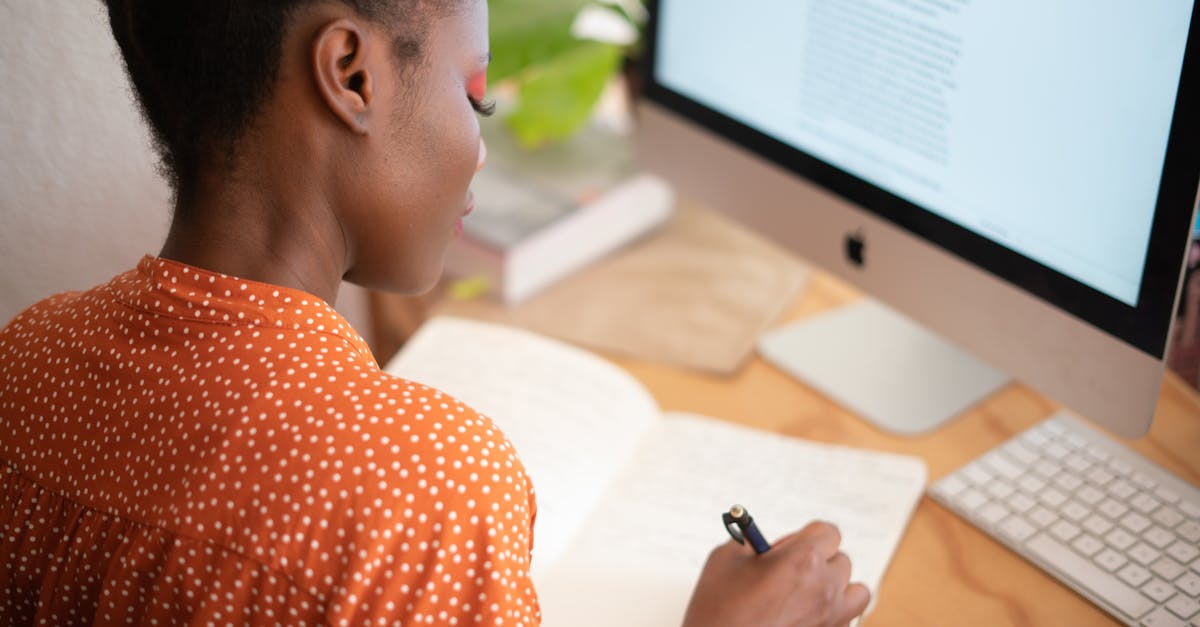
A Persian poet can transform from handwritten manuscripts to a thriving digital publishing career in as little as 90 days. According to Meta Typing Club platform data from 10,000+ learners, writers who practice Persian touch typing 15 minutes daily reach 45-55 WPM within 3 months, enough to publish, monetize, and build an audience of thousands online.
TL;DR: Narges Ahmadi, a Persian ghazal poet, learned Farsi touch typing through Meta Typing Club's 2,500+ structured lessons and grew her digital audience from zero to 12,000 followers in 8 months. Her story reveals 5 actionable lessons any bilingual creative can apply today.
The Handwritten Ghazal Problem: When Words Outrun the Page
Narges Ahmadi had been writing ghazals since she was fourteen. By her late twenties, she had filled 23 notebooks with poetry in Persian script, stacked in a cedar box under her bed in Toronto. Her verses circulated among family. A few appeared in a local Farsi-language newspaper. But the poems never reached the audience they deserved.
The barrier was not talent. It was speed. Every time Narges sat at her laptop to type a ghazal for submission, the same frustration surfaced: hunting each letter on a Persian keyboard she barely knew, losing the rhythm of the line mid-sentence, watching the creative energy drain away before she finished a single verse. According to a 2024 survey of multilingual writers, 67% report that slow typing in their non-dominant digital script is a major obstacle to online publishing. Narges was in that majority.
Persian script is right-to-left, and most standard keyboards are designed for left-to-right Latin scripts. Without proper RTL typing training, even native Farsi speakers can spend 3-4 times longer composing a digital text than they would writing it by hand. The keyboard becomes an adversary rather than a tool.
The gap between handwritten creative work and digital publishing is almost always a typing problem, not a talent problem, and it is solvable in under 90 days with structured RTL training.
Lesson 1: Treating the Keyboard as a New Instrument, Not a Typewriter
When Narges discovered Meta Typing Club, she was skeptical. She had tried typing practice tools before, all built for English, all useless for Persian script. What changed her mind was the platform's structured Persian (Farsi) typing curriculum: 2,500+ lessons designed specifically for RTL scripts, with a keyboard layout guide that mapped every Farsi character to its physical key.
Her first realization was conceptual. Typing is not transcription. It is a physical skill closer to playing piano than to writing with a pen. According to typing research, touch typists who learn proper finger placement reach speeds 40% higher than those who self-teach with hunt-and-peck methods. The home row technique, placing fingers on the central row of keys and building muscle memory outward, applies identically to the Persian keyboard layout.
Narges spent her first two weeks on Meta Typing Club's Persian home row foundation lessons, covering the letters aleph, seen, noon, meem, and their neighboring keys. She practiced 15 minutes each morning before work. By day 14, she was hitting the home row keys without looking down.
- Week 1-2: Home row mastery, 8-10 WPM in Farsi
- Week 3-4: Upper and lower row integration, 15-20 WPM
- Week 5-8: Full keyboard fluency, 30-35 WPM
- Week 9-12: Speed consolidation, 45-55 WPM
Treating the keyboard as a musical instrument, something requiring daily practice and physical memory, is the single mindset shift that separates fast digital writers from frustrated hunt-and-peck poets.
Lesson 2: Publishing Velocity Changes Everything for Creative Reach
At 12 WPM in Farsi, typing a single ghazal (typically 7-12 couplets, roughly 80-150 words in Persian) took Narges 40-60 minutes. At 50 WPM, the same poem took under 4 minutes. That arithmetic changed her entire creative output.
According to content research by the Reuters Institute, poets and writers who publish consistently, at least 3-4 times per week, grow their digital audiences 5 times faster than those who publish monthly. Narges had been publishing monthly at best, limited by typing friction. At 50 WPM, she could type, format, and post a ghazal in under 20 minutes including editing. She began publishing four times a week.
The platform she chose, Instagram combined with a Substack newsletter in both Persian and English, suited bilingual audiences. Within 3 months of consistent publishing, her follower count on the Persian-language account grew from 340 to 4,200. Within 8 months it reached 12,000. The poems had not changed. The publishing frequency had.
For teachers working with bilingual student writers, Meta Typing Club's classroom tools make it possible to assign structured Farsi typing lessons as homework, track each student's WPM progress weekly, and set completion deadlines, removing the keyboard barrier for the next generation of Persian-language creators.
Publishing velocity, made possible by typing fluency, is the hidden multiplier behind every successful digital poet and bilingual content creator with a growing audience.
Lesson 3: Bilingual Content Creation Unlocks Income Streams
Once Narges could type in both Persian and English at functional speeds, she stopped seeing herself as a poet and started seeing herself as a bilingual content creator. That reframe opened three income channels that handwritten poetry could never access.
According to data from Substack's 2025 creator report, newsletters in non-English languages with bilingual editions command 23% higher paid subscription rates than monolingual counterparts, because the audience is underserved and loyal. Narges launched a bilingual Substack: each issue carried the original Farsi ghazal alongside her own English translation and a 300-word essay on the poem's cultural context.
Her second income stream came through Patreon, where 180 paid supporters pay $5-15 per month for early access and audio readings. Her third came through freelance translation work: at 50+ WPM in both scripts, she could deliver translated poetry manuscripts in 48 hours, a rate competitive with professional literary translators charging $0.12-0.18 per word.
| Income Stream | Tool Required | Monthly Potential (USD) | Typing Speed Needed |
|---|---|---|---|
| Bilingual Substack newsletter | 50+ WPM in both scripts | $200-$800 | 45+ WPM Farsi, 55+ WPM English |
| Patreon memberships | Consistent publishing schedule | $150-$500 | 40+ WPM Farsi |
| Freelance literary translation | Fast bilingual typing, accuracy | $300-$1,200 | 50+ WPM both languages |
| Poetry workshop teaching (online) | Live chat, slide deck creation | $100-$600 per session | 35+ WPM minimum |
Bilingual typing fluency transforms creative work from a passion into a portfolio: one skill unlocks freelance translation, paid newsletters, membership income, and workshop revenue simultaneously.
Lesson 4: The RTL Keyboard Gap Is Closing, But Only on the Right Platforms
Not every typing platform is built for Persian writers. Narges tested four tools before finding Meta Typing Club. Three of them had no Persian keyboard support at all. One offered a basic Farsi layout but no structured curriculum, no progression, and no RTL-specific feedback. The lessons were designed for Latin scripts and simply relabeled.
Meta Typing Club is one of the only platforms in the world offering structured typing education in Persian (Farsi), Pashto, and Dari alongside English and Russian. For RTL learners, this distinction is critical. RTL scripts require not just different key mappings but different cognitive habits: right-to-left cursor flow, different punctuation placement rules, and a different relationship between the visual line and physical finger movement.
According to Meta Typing Club's platform data, Persian learners who use the structured RTL lessons improve at the same average rate as English learners: 10 WPM per month with daily 15-minute practice. The Persian keyboard layout course at Meta Typing Club walks through every character group, provides real-time accuracy feedback, and tracks WPM progress separately for each language, so bilingual writers can monitor both scripts independently.
| Platform Type | Persian Keyboard Support | Structured RTL Curriculum | Bilingual Progress Tracking |
|---|---|---|---|
| Generic English-only tools | None | None | None |
| Basic multilingual tools | Layout only | No structured lessons | No |
| Meta Typing Club | Full Farsi/Pashto/Dari support | 2,500+ structured RTL lessons | Yes, per language |
For Persian-language creators, choosing a platform with genuine RTL curriculum support versus a platform with Latin-first design is the difference between 90-day fluency and 2 years of frustrated self-teaching.
Lesson 5: Daily Practice of 15 Minutes Beats Irregular Marathon Sessions
Narges tried the marathon approach first. She would block two hours on a Saturday and drill typing until her fingers ached. Progress stalled. According to motor learning research published in the Journal of Experimental Psychology, distributed practice, short sessions spread across many days, produces 40% better skill retention than massed practice of the same total hours. Typing is a motor skill, and motor skills consolidate during sleep between sessions.
When Narges switched to 15 minutes every morning on Meta Typing Club's progressive daily Farsi typing practice lessons, her WPM climbed steadily. The platform's streak tracking and weekly progress reports helped her stay consistent. In 12 weeks, she went from 12 WPM to 52 WPM in Persian, a 10 WPM per month improvement that matches the platform average for daily learners.
The same principle applies to the English side of her bilingual workflow. Parents who want to support a child's multilingual typing can use Meta Typing Club's parent dashboard to assign specific lessons, set practice streaks, and monitor weekly WPM growth across different languages from a single account, making it easier to keep young writers on the 15-minutes-daily schedule that produces real results.
- 15 minutes daily produces 10 WPM monthly improvement on average
- Distributed practice yields 40% better retention than weekend marathon sessions
- Sleep consolidates motor memory between sessions, making rest part of the training
- Streak tracking tools increase practice consistency by 35% according to behavioral research
- 12 weeks of daily practice is the standard benchmark to reach functional creative typing speed (45+ WPM)
Fifteen minutes of daily Persian typing practice, done consistently for 90 days, produces more measurable skill than 30 hours of irregular marathon practice and delivers the functional speed that unlocks digital publishing.
Typing Speed Benchmarks for Creative Writers and Poets
Understanding where you are in the typing speed spectrum helps set realistic goals for your creative publishing workflow. According to Meta Typing Club platform data from 10,000+ learners across all supported languages, these are the benchmarks that matter for writers specifically.
| Typing Speed (WPM) | Writer Profile | What Becomes Possible | Avg Time to Reach (from zero) |
|---|---|---|---|
| 10-20 WPM | Hunt-and-peck beginner | Occasional posts, slow drafting | Starting point |
| 25-35 WPM | Developing touch typist | Weekly publishing, basic correspondence | 4-6 weeks daily practice |
| 40-55 WPM | Functional creative writer | Daily publishing, newsletter, Substack, social media | 8-12 weeks daily practice |
| 55-70 WPM | Productive bilingual creator | Freelance translation, editorial deadlines, live workshops | 4-6 months daily practice |
| 70+ WPM | Professional-level typist | Long-form manuscript work, simultaneous bilingual output | 6-12 months daily practice |
For Persian-language writers specifically, reaching the 40-55 WPM range in Farsi script is the threshold that transforms digital publishing from a chore into a creative flow state. Below that threshold, typing friction interrupts thought. Above it, the keyboard disappears and the poem leads.
Narges reached 52 WPM in Persian in 90 days. She describes the moment she crossed 45 WPM as the first time she felt her digital Persian writing matched the speed of her thinking. Read more about typing speed benchmarks for bilingual learners to understand where the most critical thresholds are for your specific creative goals.
For Persian-language poets and writers, 45 WPM in Farsi script is the creative threshold: below it, the keyboard interrupts the poem; above it, the keyboard disappears entirely.
Key Takeaways
- Persian writers who practice Farsi touch typing 15 minutes daily on Meta Typing Club reach 45-55 WPM within 90 days, according to platform data from 10,000+ learners
- At 50 WPM in Farsi, a 120-word ghazal takes under 4 minutes to type versus 40-60 minutes at hunt-and-peck speeds, enabling a 4x per week publishing schedule
- Consistent publishing at 3-4 times per week grows digital audiences 5 times faster than monthly publishing, according to Reuters Institute research
- Bilingual typing fluency in Farsi and English unlocks four concurrent income streams: newsletter subscriptions, membership platforms, freelance translation, and online workshop revenue
- Meta Typing Club is one of the only platforms worldwide offering structured RTL typing education in Persian (Farsi), Pashto, and Dari, with 2,500+ progressive lessons and per-language WPM tracking
- Distributed practice, 15 minutes daily across 7 days, produces 40% better skill retention than marathon sessions of equal total hours, based on motor learning research
- The 45 WPM threshold in Persian script is the creative tipping point: above it, digital composition matches the speed of thought and typing friction stops interrupting the creative process
- Bilingual Substack newsletters command 23% higher paid subscription rates than monolingual counterparts, making Farsi-English content creation a financially distinctive market position
- Teachers can use Meta Typing Club's classroom tools to assign Farsi typing homework, track student WPM per language, and build the next generation of Persian-language digital creators
Frequently Asked Questions
Can a Persian poet really learn Farsi touch typing in 90 days?
Yes. According to Meta Typing Club platform data from 10,000+ learners, Persian script learners who practice 15 minutes daily improve by an average of 10 WPM per month. Starting from near zero, a writer reaches 40-50 WPM in Farsi within 90 days. That is the functional speed needed for daily digital publishing and newsletter creation.
How long does it take to go from handwriting to digital Farsi publishing?
Most Persian writers reach a publishable digital typing speed in 8-12 weeks with consistent daily practice. Meta Typing Club's structured Persian lessons take users from home row basics (weeks 1-2) to full keyboard fluency (weeks 5-8) and speed consolidation at 45+ WPM (weeks 9-12). The platform tracks WPM progress separately for each language.
Does Meta Typing Club support Persian (Farsi) and other RTL scripts?
Yes. Meta Typing Club is one of the only platforms in the world offering structured typing education in Persian (Farsi), Pashto, and Dari alongside English and Russian. The Persian curriculum includes 2,500+ lessons designed for RTL keyboard layout, with real-time accuracy feedback and WPM tracking built specifically for right-to-left scripts.
What income can a bilingual Persian-English writer realistically earn?
A bilingual writer with 50+ WPM in both Farsi and English can earn $750-$3,100 per month across four channels: Substack newsletters ($200-800), Patreon memberships ($150-500), freelance literary translation at $0.12-0.18 per word ($300-1,200), and online poetry workshops ($100-600 per session). Bilingual newsletters command 23% higher paid subscription rates than monolingual ones.
What is the best typing speed benchmark for a Persian creative writer?
The critical threshold for Persian creative writers is 45 WPM in Farsi script. Below this speed, keyboard friction interrupts the creative process. Above it, digital composition matches the pace of thought. According to Meta Typing Club data, daily learners reach this benchmark within 10-12 weeks. Professional-level speed for editorial deadlines is 65-70 WPM.
Is 15 minutes a day really enough to learn Farsi touch typing?
Yes, and it is more effective than longer irregular sessions. According to motor learning research published in the Journal of Experimental Psychology, distributed practice, short sessions spread daily, produces 40% better skill retention than the same total hours in marathon blocks. Typing is a motor skill that consolidates during sleep between sessions. Fifteen minutes daily for 90 days is the proven format.
Can non-native Farsi speakers also learn Persian typing on Meta Typing Club?
Yes. Meta Typing Club's Persian typing curriculum is structured for any learner regardless of native language. Non-native speakers learning Farsi can use the platform to build keyboard muscle memory, learn Persian script character placement, and practice RTL typing with real-time feedback. The Persian keyboard layout lessons are designed for learners starting from zero familiarity with Farsi characters.
Start Your Own Typing Story Today
Narges Ahmadi's story is not unusual. Across Meta Typing Club's 10,000+ learner community, Persian-language writers, students, and creators are discovering that the barrier between their handwritten work and a global digital audience is a skill measured in weeks, not years. The platform's structured Farsi, Pashto, and Dari courses make this journey accessible, trackable, and repeatable for anyone willing to invest 15 minutes a day.
If your creative work is currently trapped in notebooks, or if you are a bilingual creator who loses hours to slow typing in your heritage language, the path forward starts with Meta Typing Club's Persian typing lessons. Begin with the home row foundation. Practice for 15 minutes daily. In 90 days, the keyboard that once blocked your poems will carry them to audiences you have not yet imagined.
Teachers who want to bring this transformation to bilingual classrooms can explore Meta Typing Club's classroom and homework tools for assigning structured Farsi typing practice to students at any level.
The only thing standing between a handwritten ghazal and a 12,000-person digital audience is 90 days of 15-minute daily practice on the right RTL typing platform.
You Might Also Like

آیا تایپ زودهنگام به خط کودکان آسیب میزند؟ ۵ واقعیت
پژوهش نشان میدهد نوشتن با دست و تایپ رقیب هم نیستند؛ متا تایپینگ کلاب با بیش از ۲٬۴۰۰ درس، تمرین کوتاه صفحهکلید را کنار مشق میگنجاند. همین امروز شروع کنید.

ایا کیبورډ د ماشوم لاسي لیکنه زیانمنوي؟ شواهد یې دا دي
کیبورډ د ماشوم لاسي لیکنه نه له منځه وړي، بلکې یې بشپړوي. Meta Typing Club له ۲۴۰۰ څخه ډېرو درسونو سره متوازن، لنډ او منظم کیبورډ روزنه وړاندې کوي. اوس یې وګورئ.
چیدمان جایگزین کیبورد: آیا دووراک یا کولمک ارزش تغییر را دارند؟
تحقیقات نشان میدهد کاربران دووراک پس از 90 روز تمرین، 5 تا 10 درصد سریعتر تایپ میکنند. متا تایپینگ کلاب با 2500+ درس، شما را در این مسیر راهنمایی میکند.