
Keyboarding Instruction on a Six-Day Specials Rotation
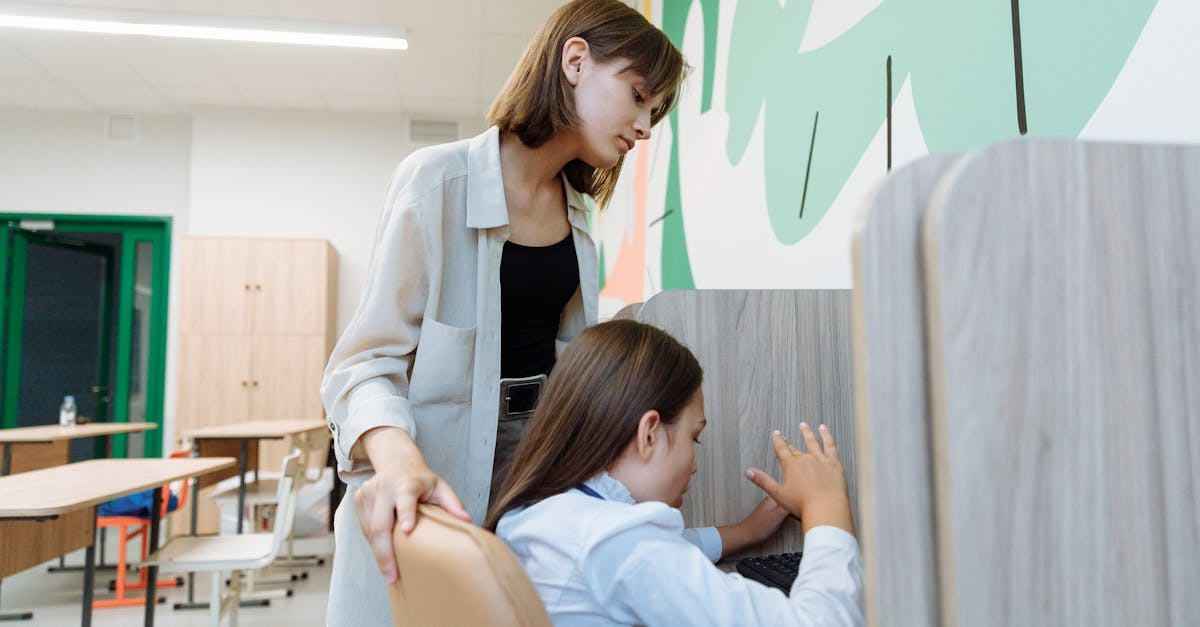
Keyboarding instruction survives a six-day specials rotation when the lab block delivers technique and diagnosis and the days between visits deliver volume. A rotation yields about 12 hours on keys per class per year, so Meta Typing Club's homework with due dates carries the other half.
TL;DR: A six-day rotation gives you about 24 sessions and 12 hours on keys per class a year, against guidance that asks for four short sessions a week. Use the block for coaching and the days between for repetitions, and tell your principal what that cadence can and cannot produce.
Run the arithmetic before you promise anything
Six-day cycle, 40-minute block, 175 instructional days, and swap in your own calendar. That is about 29 visits per class. Subtract two for assemblies, one for a field trip, two for testing, and you land near 24. Take out the 9 minutes each block loses to arrival and shutdown, and the year is roughly 12 hours on keys.
Compare that to the guidance. Wisconsin's Department of Public Instruction tells schools to "set aside a regular time for keyboarding (ideally 15 to 30 minutes/day for five to six weeks)" and benchmarks progress at 5 words per minute times grade level, so 15 WPM for a third grader. That quote describes a concentrated unit, which a rotation thins out. Arlington ISD's guidelines are blunter: "Four sessions per week of 20 minutes each, for example, have proven much more effective than two sessions of 45 minutes each."
Every dosage recommendation you can cite assumes a cadence you do not have. Name that gap in September: 12 hours of lab time against guidance built on 15 to 30 minutes a day.
What the research says about your cadence, and where it stops helping
Short and frequent beats long and banked. Baddeley and Longman trained adult postal workers on a sorting keyboard in 1978, under four schedules with total hours held constant. Smith and Scarf's 2017 Frontiers in Psychology review reports what happened. The least intense group, one hour once a day, "learned to type faster and more accurately" than the groups training two hours twice a day. Concede the limit: that winning group still practiced an hour every day, more keyboard time than your class gets in a whole cycle.
Spread practice across the calendar and it usually beats cramming, though the youngest students are where the rule wobbles. A 2025 review in Behavioral Sciences pooled 22 studies across 3,000 learners and found "a moderate effect in favor of distributed over massed practice (d = 0.54)", while Mawson and Kang report that primary-school studies "produced the largest number of negative effects."
With young students, spacing competes against forgetting, and six days with nothing inside them is a gap. Neither study tested a schedule like yours, so the between-visit minutes have to carry the argument.
A 40-minute session, minute by minute
The 40 minutes are door to door, and this assumes badge or QR sign-in. K-2 classes typing passwords need 6 minutes of sign-in rather than 4, taken from the individual path.
| Minutes | What happens | Why it earns the time |
|---|---|---|
| 0 to 4 | Seats, badge sign-in, posture called by name: feet flat, wrists up | No software corrects posture |
| 4 to 8 | Technique demo on today's key pair, then a 90-second no-look drill | Stops finger-hunting early |
| 8 to 16 | Guided practice at class level, taught from the back row where all screens are visible | Cheapest correction point |
| 16 to 20 | One timed run, accuracy target announced before speed | A comparable number |
| 20 to 30 | Individual path: each student resumes where they stopped | Serves the 30 WPM student and the beginner together |
| 30 to 35 | Applied task: one grade-level text per cycle, reused across sections | Prep cost is one text |
| 35 to 40 | Log the run, assign the between-visit practice, shut down | Assign here or not at all |
The individual block is where your evidence comes from; you teach nobody in those 10 minutes. You walk the row writing names: collapsed wrists, stuck three visits on one lesson, ready for harder work, done early with nothing to do. Everything a screen can do alone should happen while you are looking at someone's hands.
When the rotation gets cut to 25 minutes
Assemblies happen. Cut in this order: the applied task, 5 minutes; the individual path from 10 to 6; the timed run, 4 minutes; guided practice from 8 to 6. That is 15 minutes gone, leaving 4 in, 4 on the demo, 6 guided, 6 individual, 5 out. Keep the technique demo and the posture call at full length. A short session that holds the coaching is still a session. Free typing time is a study hall with a keyboard.
The six days between visits are the actual program
12 hours a year will not carry a class to grade-level fluency. Five minutes of keyboarding at arrival every school day is 875 minutes on paper, or about 13 hours once you subtract roughly one day in nine to absence.
Set up a class with an invite code so every student is in your roster on visit one. Assign the practice with a due date before the class leaves the room, and check completion out loud next session so the work stays visible.
Across Meta Typing Club's 10,000+ learners, daily practice averages roughly 10 WPM of gain per month, and that figure is ours, not an independent finding. Daily is what a rotation cannot supply, so that monthly gain is what a day without keys forfeits.
You cannot require a home device, and you own no minutes outside your block. So keep the ask small: five minutes at arrival, every school day, on the devices already in the room. The case for where those minutes belong in the master schedule is made in Where Keyboarding Fits When the Schedule Is Already Full. Five minutes at arrival every school day is worth about 13 hours a year, against the roughly 12 hours the lab delivers.
The 30 WPM gamer and the student still hunting for S
Every rotation class holds a fourth grader who types 30 WPM from two years of gaming and one still hunting for the letter S. Pitch at the middle and the fast kid finishes in four minutes and becomes a behavior problem while you are still starting the beginner. Run one technique demo for the whole room, because the fast typist usually has worse form, then split for individual practice and let Meta Typing Club's lesson sequence place each student, which keeps your attention on hands and posture. Give the fast ones a 95 percent accuracy floor instead of a speed target; in practice that floor is the harder ask, and it stops a two-finger sprinter hardening a technique that caps out in middle school.
That sequence holds more than 2,000 structured lessons in multiple international languages, and courses in Persian, Pashto and Dari are hard to find, which matters the week a newcomer arrives who cannot read the practice text, and is part of why we built ours.
The objection that lands
The strongest argument against a rotation-delivered typing program comes from one of our own sources. Arlington ISD holds that practice concentrated into a few weeks beats practice spread across months, and Mawson and Kang's primary-school weakness points the same way.
That objection is substantially right. A rotation is a worse delivery vehicle than a concentrated four-week unit, and no platform closes that gap.
So ask for both, and name who does what. Request a concentrated launch in October, once beginning-of-year benchmark windows clear: four weeks of 20 minutes a day in the classroom teacher's room, roughly 6.5 hours, with the arrival minutes paused for the duration. You write the sequence and the assignment schedule; the teacher supervises a session already built; you deliver the technique demo in person on the rotation visits inside those four weeks. The rotation carries maintenance for the remaining 27 weeks, which fits the evidence better than either piece alone. If the launch is refused, put the maintenance-only limit in writing and lower the benchmark.
What to send upward before budget season
Take this as a pattern we have watched, with no study behind it: programs that reach budget season with a page of numbers keep their line item, and specials is where a squeezed budget looks first.
| What you report | Where it comes from | The question it answers |
|---|---|---|
| Class average WPM, September and now | Teacher dashboard | Is anything moving? |
| Accuracy at the current speed | Teacher dashboard | Habits or bad habits? |
| Percent at 5 WPM times grade level | Wisconsin DPI benchmark | Against whose standard? |
| Percent of fifth graders above 20 WPM | Ertl 2007, grade-5 threshold | Will it survive middle school? |
| Completion of between-visit work | Assignment records | Is the gap being bridged? |
| Minutes delivered versus scheduled | Your session log | What did we actually buy? |
The fourth row needs a caveat you should volunteer yourself. Ertl's 2007 study followed 132 seventh graders in one district: those whose fifth-grade touch speed reached 20 WPM were far more likely to keep the skill two years later, and below 20 the odds were near even. That is an aim point, not a law.
One caution: ISTE's student standards ask that students "understand fundamental concepts of how technology works" and never name keyboarding, so do not claim ISTE requires it. Cite the district benchmark. Report the minutes you were given next to the results you produced, and the data stops being a verdict on your teaching.
Key takeaways for a rotation teacher
- A six-day rotation in a 175-day year delivers about 24 sessions and 12 hours on keys per class.
- Five minutes at arrival every school day is worth about 13 hours a year, more than the block itself.
- Guidance asks for four 20-minute sessions a week; a rotation supplies one 31-minute session every six days.
- In the 1978 keyboard study, one hour once a day beat two hours twice a day, and every group still practiced daily.
- Distributed practice shows a moderate classroom effect of d = 0.54 across 22 studies, but primary grades produce the most negative results.
- When 40 minutes collapse to 25, cut the applied task, individual path, timed run, then guided practice; keep the demo whole.
- Ask for a four-week October launch, scripted by you and supervised by the classroom teacher, with a maintenance-only fallback in writing.
Frequently asked questions
My classes come every six days. Is it even worth starting?
Yes, with the goal stated correctly. A rotation reliably produces correct technique and a home-row habit, and it moves students toward 5 WPM times grade level. It will not produce grade-level fluency on block time alone, so say that up front.
The classroom teachers will not give up any minutes. What now?
Shrink the ask until refusing it looks unreasonable: five minutes at arrival, every school day, assignment already set, completion list emailed to them. Teachers refuse plans that create work. They rarely refuse five supervised minutes that arrive pre-built.
How do I place students who already type without making them redo home row?
Let the Meta Typing Club sequence place them. Run one diagnostic timed passage in the first session, then send each student into the sequence at the point their result matches. The advanced typist still takes the technique demo, because a fast two-finger typist needs it most.
What do I do with the class that keeps missing the lab?
Log it. Record every missed session with its reason, so when that class trails the others in spring the explanation is already on paper. A class that received 18 sessions should be judged against 18 sessions. Bring that count before someone else brings the scores.
How do I grade this without adding hours to my week?
Grade participation and accuracy, both already recorded. One timed run per session plus the completion status of the between-visit assignment gives two objective marks per cycle. Grading young students on speed rewards the ones who arrived fast.
A parent says her son already types quickly with two fingers. What do I tell her?
Agree with her, then move the goal. He is fast for now, and the ceiling shows up in middle school when assignments run long and his eyes cannot leave the keyboard. Offer her a parent account linked to his, so she can watch accuracy as well as speed.
Our budget line for this is zero. Does that change what I can promise?
The risk changes. The plan holds. Meta Typing Club is currently free to use with no subscription and no per-student charge, as our FAQ page states, and it runs on donations. Our terms reserve the right to add paid features later, so ask every vendor that question, ours included.
Where to start next cycle
Pick one class this school year and log its real session count and usable minutes, with one between-visit assignment running alongside. Four cycles later, about five school weeks, you have a number for what a rotation delivers in your building, and that number survives a schedule rewrite. If you must sell this upward, the questions leadership will ask are in Before You Pitch a Typing Platform to Your Principal. Set up a class at Meta Typing Club.
You Might Also Like
Экзамен по информатике сдают за компьютером, а печатать не учат
ОГЭ и ЕГЭ по информатике идут за компьютером, а навык ввода текста в школе никто не ставит. Разбираем цепочку до первого класса. Meta Typing Club помогает закрыть пробел. Начните с аудита.

ارزیابی آنلاین دبستان: ۴ مهارت که هیچکس درس نداده
سنجش کلاسی دیجیتال دبستان تایپ را هم میسنجد، نه فقط دانش را. Meta Typing Club با بیش از ۲٬۴۰۰ درس این مهارت را از پایه اول میسازد؛ همین امروز شروع کنید.

شش سال فاصله: از حسنخط صنف اول تا کمپیوتر صنف دهم
نصاب ملی کمپیوتر را از صنف دهم آغاز میکند، اما فورم بورسیه و پذیرش پوهنتون خصوصی زودتر تایپ میخواهند. متا تایپینگ کلاب با بیش از ۲۴۰۰ درس این شکاف را پر میکند.